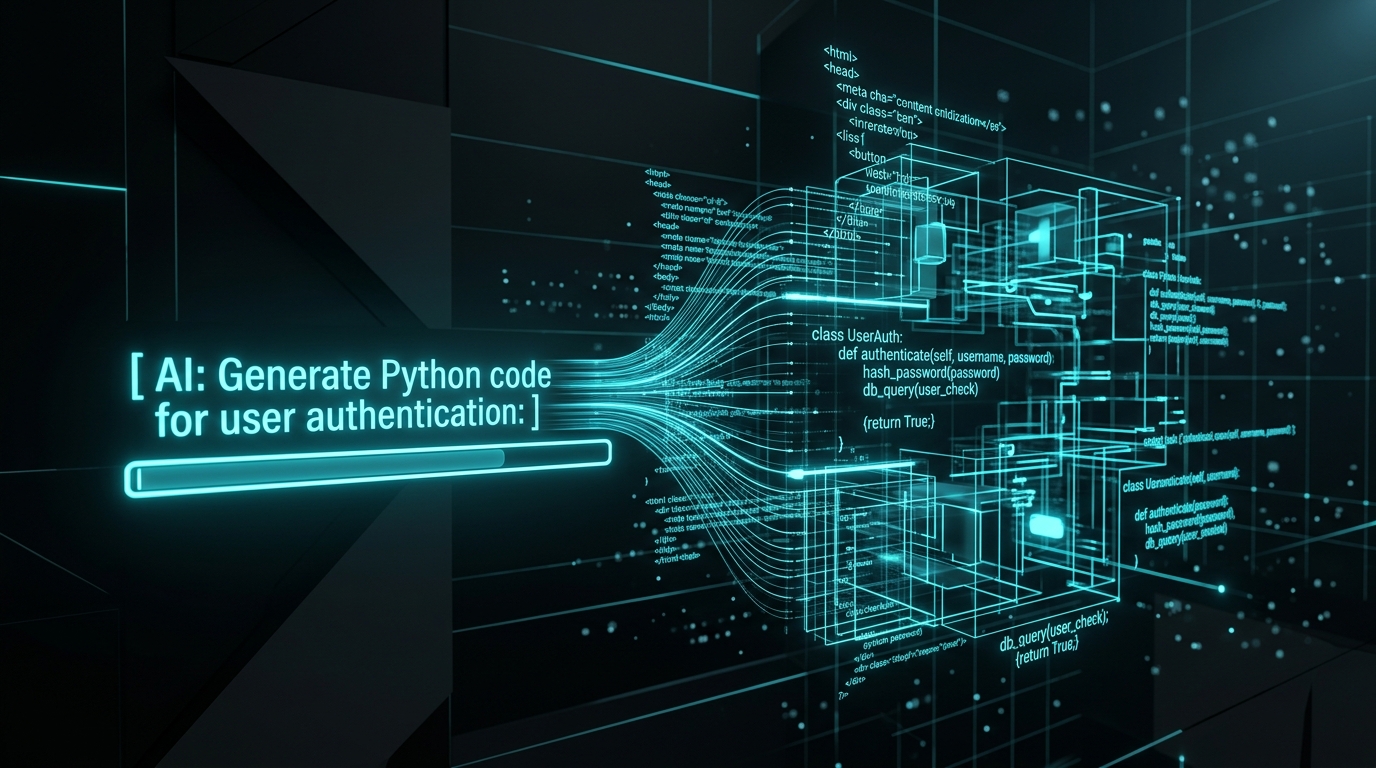
If you have been anywhere near tech Twitter or LinkedIn in 2026, you have seen the vibe coding demos. Someone opens an AI tool, types "build me a task management app with user login and a Kanban board," and three minutes later a functional-looking application appears. It is genuinely impressive to watch.
So the question a lot of business owners are asking is obvious: why would I pay a developer when I can just do this myself? It is a fair question, and it deserves a straight answer rather than either a breathless endorsement or defensive dismissal from someone trying to protect their livelihood.
1. What Vibe Coding Actually Is
Vibe coding refers to using AI-powered tools like Cursor, Lovable, Bolt, or Replit Agent to generate functional software from natural language descriptions. You describe what you want, the AI writes the code, and you get something you can run in the browser or on your phone.
The tools have gotten genuinely good. For simple, well-defined applications, they can produce working software that would have taken a junior developer days or weeks to write. This is real progress and it is genuinely useful for certain categories of work.
"Vibe coding in 2026 is what WordPress was in 2010. It democratizes a category of work that used to require significant technical skill. And just like WordPress, it has a ceiling."
2. What It Does Well
Vibe coding is genuinely effective for:
- Prototypes and demos: If you need to show an investor or potential customer what the product could look like, a vibe-coded demo works great.
- Simple internal tools: A basic CRUD app for your team, a data entry form, a simple dashboard with static data, these are all reasonable vibe coding targets.
- Validating a layout or UX flow: Before committing to custom development, using AI tools to mock up how the screens should work is a legitimate and fast approach.
- Learning what you want: Sometimes the process of building something roughly reveals what the real requirements should be. That is valuable even if you throw the output away.
3. Where It Falls Apart for Business Apps
This is the part the demos do not show. The demos always start fresh with a simple request. Real business apps do not look like that.
Real business apps have complex data relationships that need to be carefully modeled. They have security requirements around who can see what data and under what conditions. They have payment flows that need to handle failed charges, refunds, and disputed transactions. They have edge cases built from real user behavior that nobody anticipated in the original brief. They need to run reliably for thousands of users simultaneously without slowing down or crashing.
When you push a vibe-coded app past the basics, the problems compound quickly. The AI generates code that works for the happy path but has no error handling. The data model it chose works for the demo but breaks when you add a real-world scenario. The code becomes increasingly hard to maintain as you make changes, because nobody designed it with the full picture in mind.
"The gap between a working demo and a production application is not a small step. It is a different kind of work entirely. Vibe coding crosses the first gap easily. It struggles with the second."
4. The Security Problem
This one deserves its own mention. AI-generated code has a well-documented tendency to produce security vulnerabilities. Not because the AI is malicious, but because it generates code optimized for the immediate task, not for the full threat model. Authentication systems generated by AI tools regularly have issues with session handling, input validation, and access control that a security-conscious developer would catch immediately.
If your app handles real user data, payment information, or anything sensitive, AI-generated code from a vibe coding session needs a serious security review before going anywhere near production. That review requires exactly the kind of expert who was supposed to be replaced by the AI tool.
5. The Honest Use Case for Vibe Coding in Your Business
Use it for exploration, not for production. Use it to figure out what you want before you pay to build it properly. Use it for internal tools where the stakes of a bug are low. Use it to validate a concept before committing budget.
Do not use it as the foundation of a customer-facing product that needs to be secure, reliable, and maintainable over the next three years. The short-term savings are real. The long-term costs of rebuilding broken, ungovernable AI-generated code are also real, and they tend to show up at the worst possible time.
The Bottom Line
Vibe coding is a legitimate tool that belongs in the modern development toolkit. It is not a replacement for professional software engineering on anything that matters to your business. The people who are getting the most value from it are experienced developers who use it to move faster, not business owners trying to avoid hiring developers entirely. That pattern is not an accident.